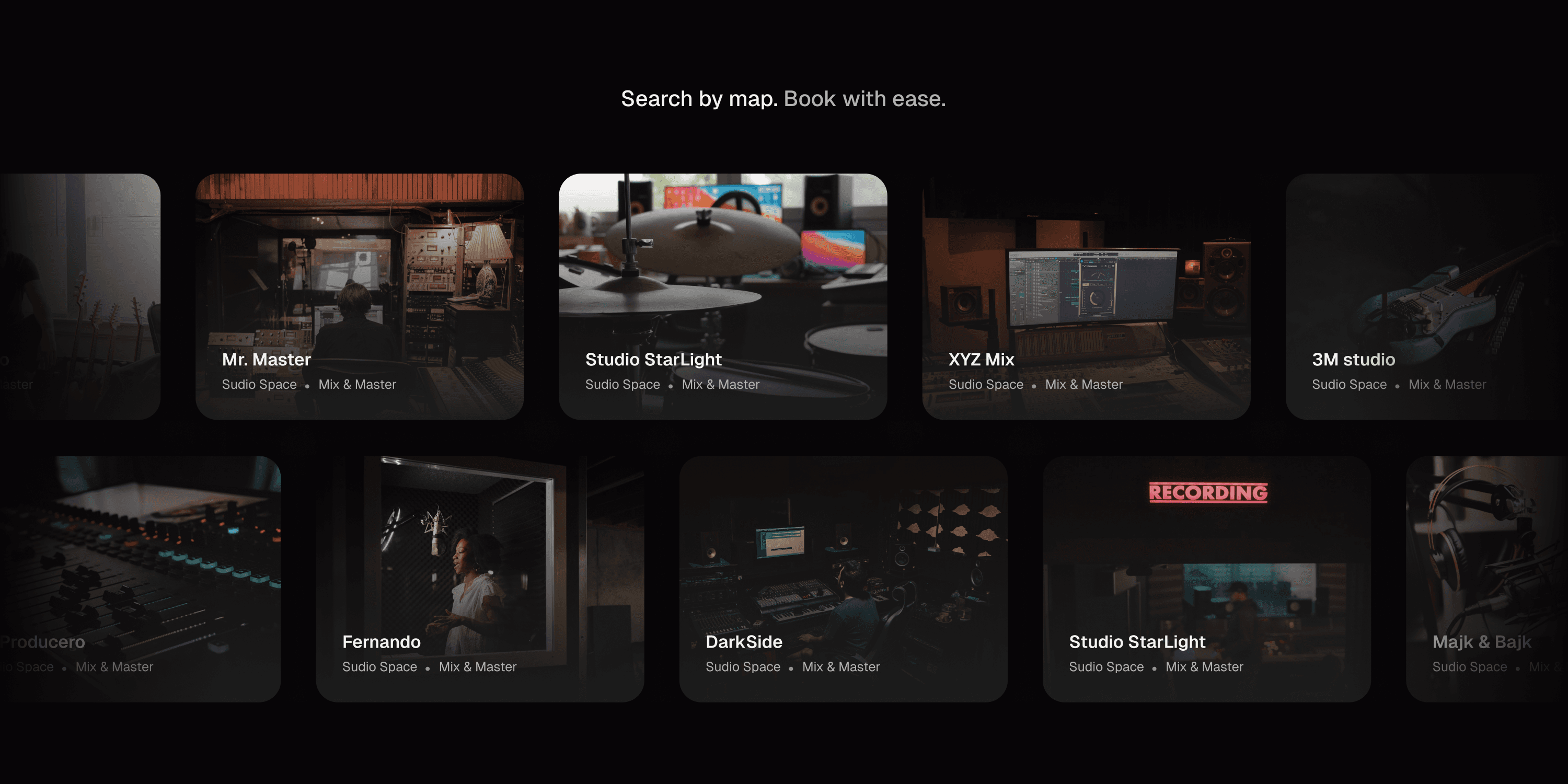
MixLodge: Brand & MVP for a studio booking platform that connects musicians, studios, and remote producers.
2025 • Not yet launched
TL;DR
Shaping an early idea into a clear, buildable product.
Context
MixLodge started as an idea for "a platform for musicians and producers." In practice, that meant a broad set of loosely defined features, minimal prioritization, and many open questions. There was no existing product structure to build from, and the first task was figuring out what the platform needed to be in order to work.
Discovery & framing
Before designing UI, I ran a short discovery phase to clarify constraints, identify gaps, and map dependencies between different parts of the product. The goal wasn't to lock down every decision, but to establish a clear frame that would support design and development without overcommitting too early.
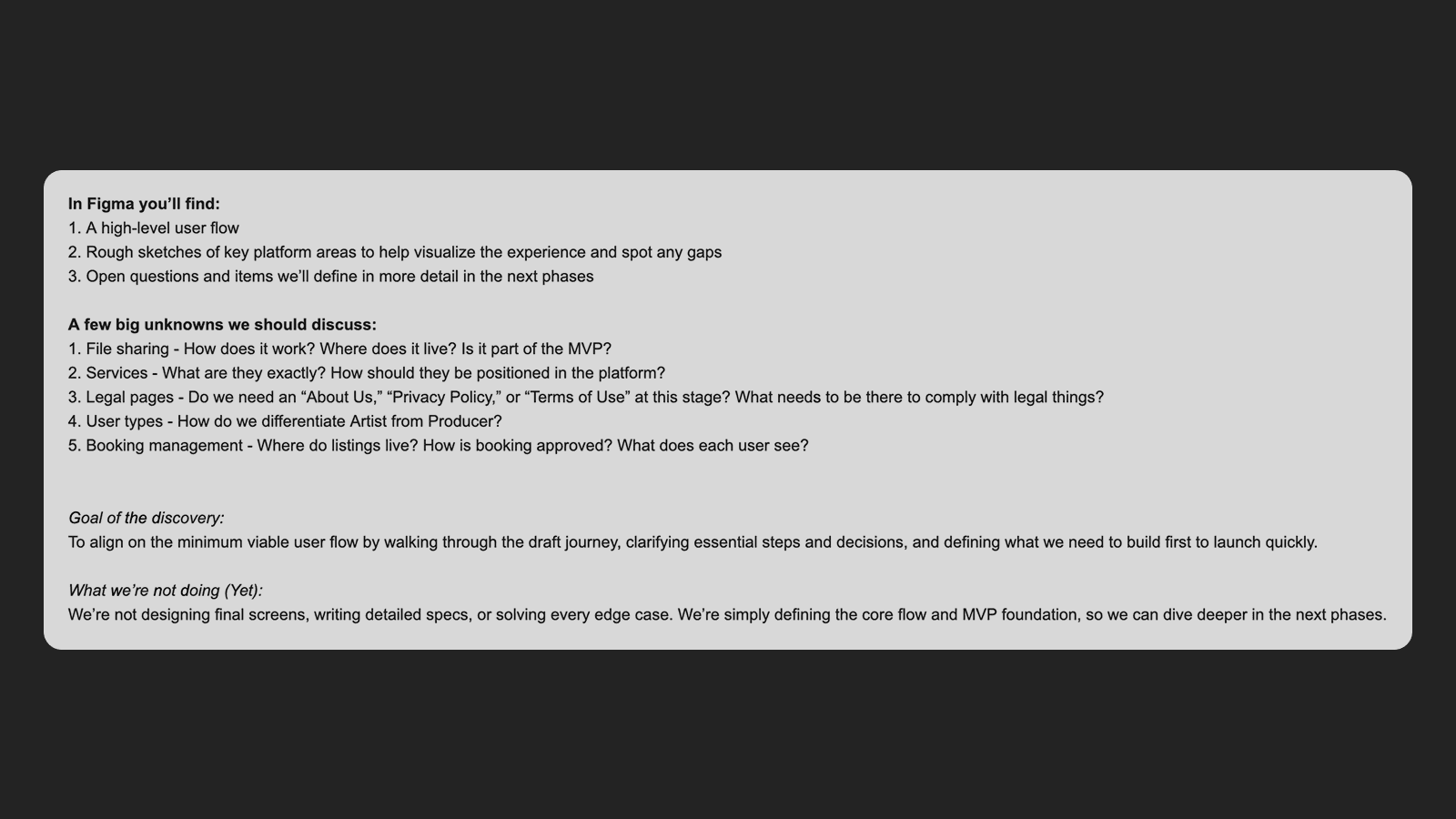
One decision shaped the rest of the work: MixLodge wasn't a single workflow. It needed to support two distinct modes of use:
- musicians searching for and booking studios
- producers collaborating remotely once a booking happened
These workflows had different needs and priorities, but they had to coexist within one system without fragmenting the product.
Designing toward a workable MVP
Instead of attempting a full marketplace upfront, the MVP was shaped around a small set of structural decisions:
- clear roles and access patterns
- a focused discovery and booking flow
- a concrete answer to what happens after a booking
The product was intentionally scoped around a single loop: discovery → booking → collaboration. Anything that didn't support that loop was deprioritized or left out. The work was structured in phases, each resolving a specific part of the loop and ending with dev-ready designs, defined states, and explicit interaction logic.
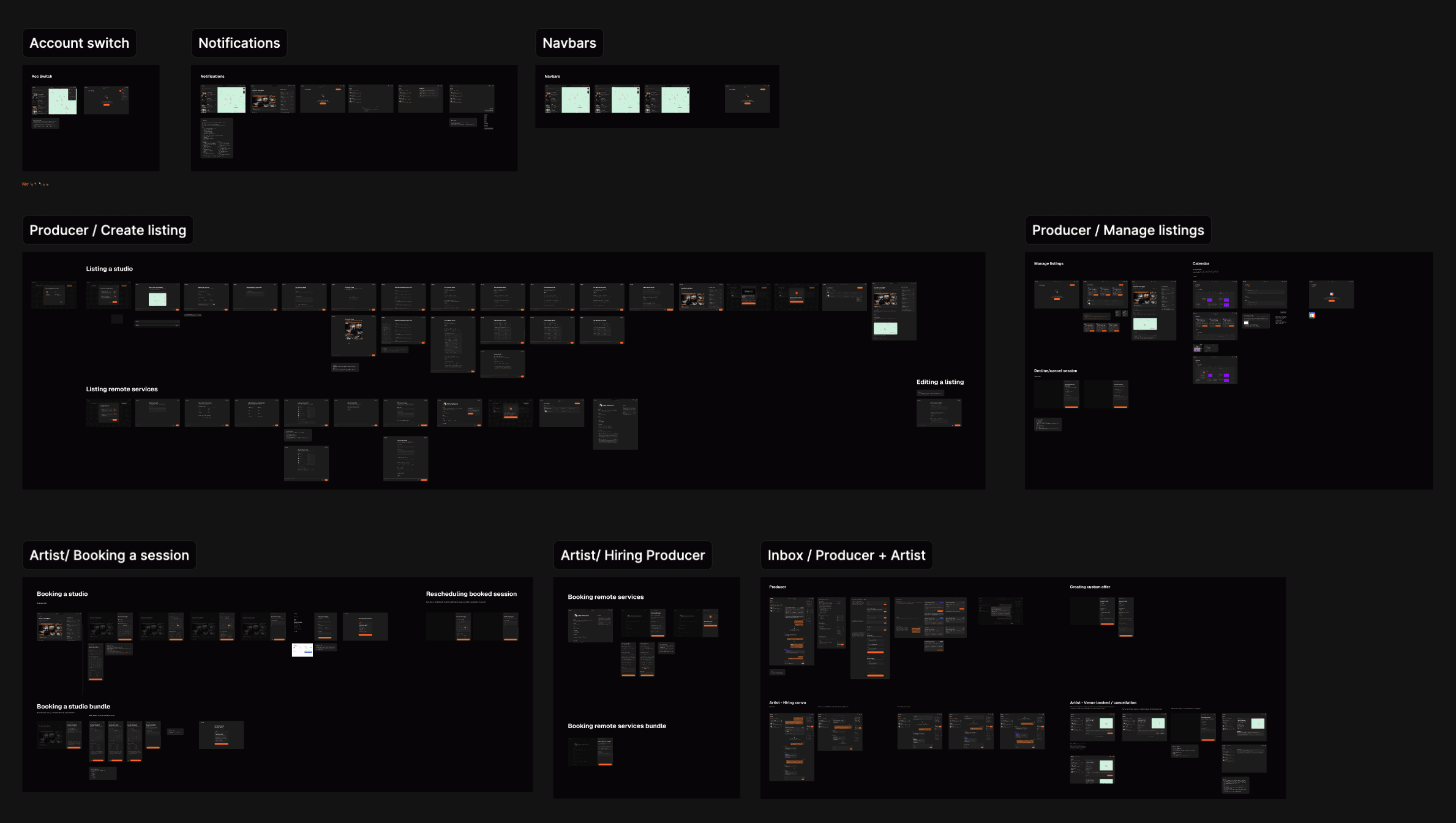
Design artifacts carried intent directly. Flows, edge cases, and role-specific behavior were resolved in the UI itself, allowing the team to discuss concrete product behavior rather than abstract feature lists.
Product clarity through design
As the core workflows were designed in detail, it became clear that booking alone wasn't enough. Once a session was booked, users needed a shared place to actually work together.
Instead of introducing a separate "project" area, collaboration was anchored in the inbox. Each booking creates a dedicated conversation that becomes the workspace for everything that follows — chat, file sharing, tasks, and ongoing updates.
This wasn't treated as an add-on feature. It emerged naturally from designing real scenarios end to end. Working through concrete flows — from first contact to final delivery — clarified what the product needed in order to function as a complete system.
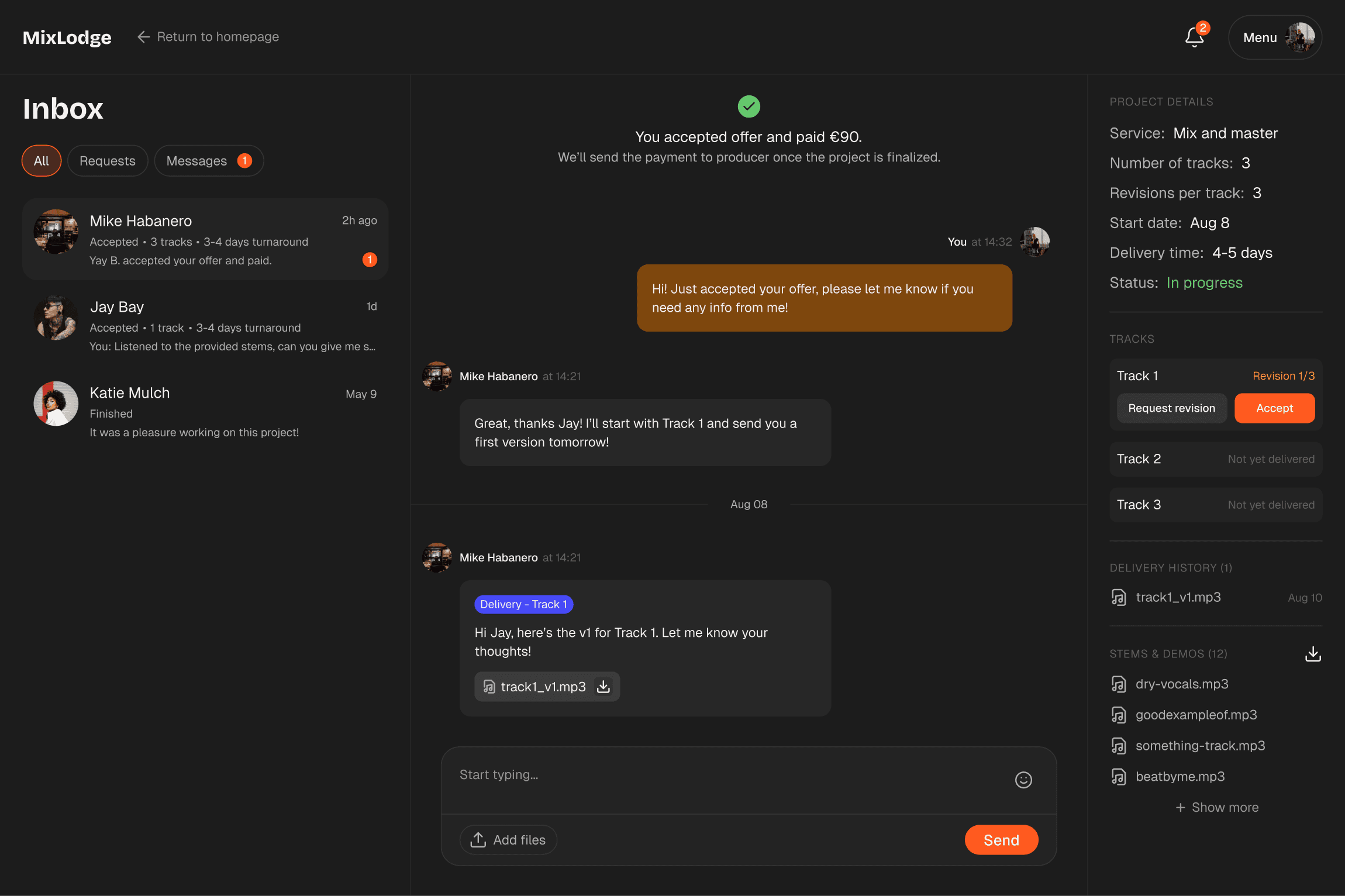
Collaboration workspace.
Design system & visual direction
Given the scope and constraints, the focus wasn't on building a comprehensive component library. Instead, the goal was to establish a small, resilient design language that could support the product without slowing development:
- a minimal token set for color, type, spacing, and radii
- a single flexible card pattern reused across most surfaces
- consistent interaction patterns across both roles
The landing page was developed in parallel and used as the visual anchor. Content, structure, and visual direction were defined together, then carried into the product to keep everything aligned.
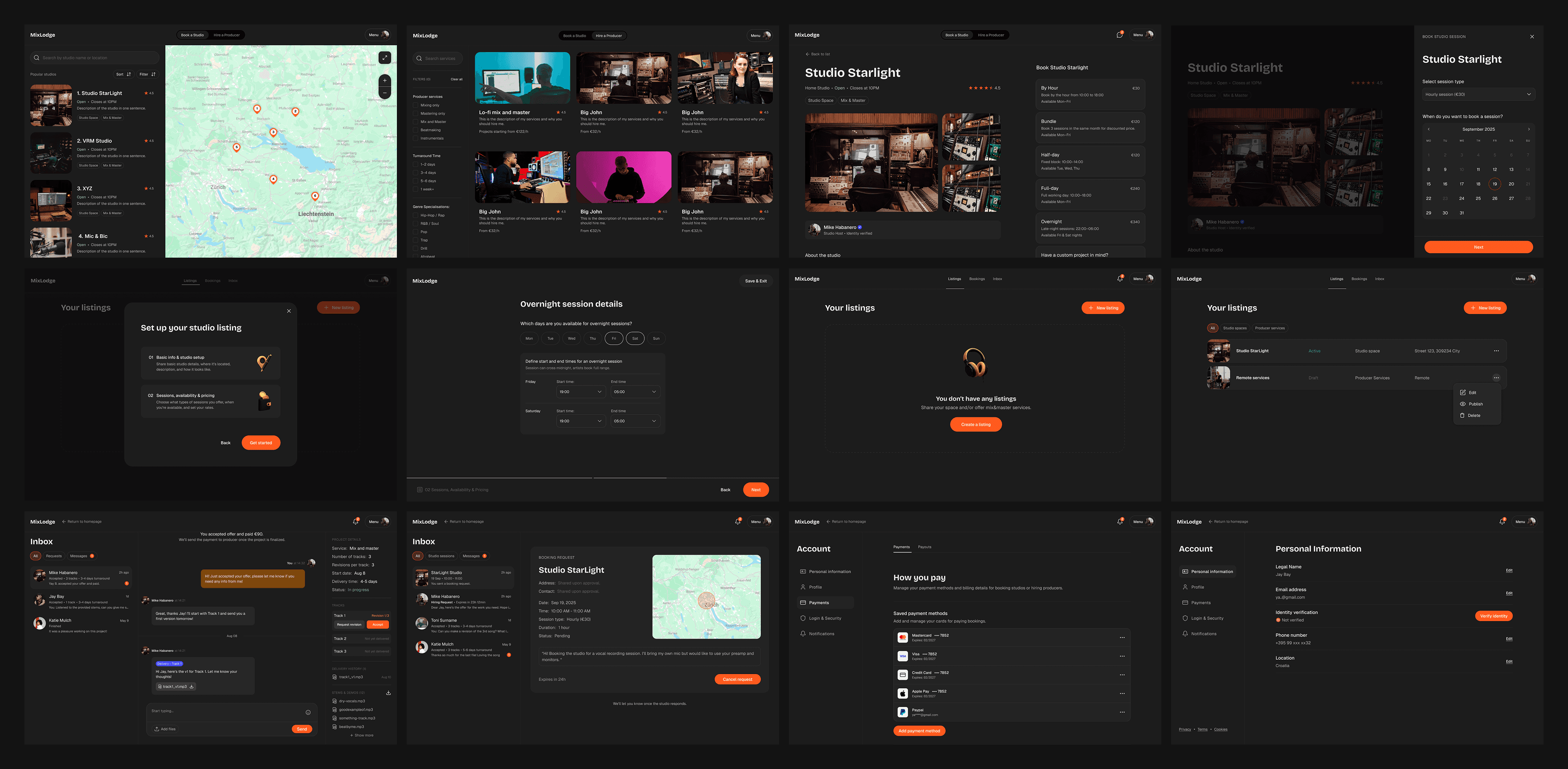
The design language was kept minimal and consistent across the product.
Outcome
The result was a clearly defined MVP ready for development:
- a responsive platform covering discovery, booking, payments, and collaboration
- explicit user flows and interaction logic across all core scenarios
- a stable visual identity and lightweight system the team could extend
The work turned a loosely framed idea into a product structure the team could build, discuss, and iterate on.