2025
Designing and building this portfolio as a real product
Summary
- Designed and implemented a custom portfolio as a structured system rather than a static site.
- I wanted to understand how to integrate AI tools into a real design-to-code workflow without losing control over structure and quality.
- Built a repository-based AI workflow to maintain control over design intent, code quality, and long-term extensibility.
Context
I wanted a custom portfolio built from scratch, without templates. At the same time, I wanted to understand how AI-assisted workflows actually behave when turning design intent into working interfaces.
Instead of treating AI as a shortcut, I used the portfolio as a playground.
This case study covers the first version of my portfolio. A newer version of the site has since been rebuilt with a different architecture and design system, and I’m currently writing an updated case study about that process.
Starting with design
I began in Figma and designed the portfolio first, without worrying about implementation. I focused on layout, hierarchy, pacing, and how long-form case studies should read.
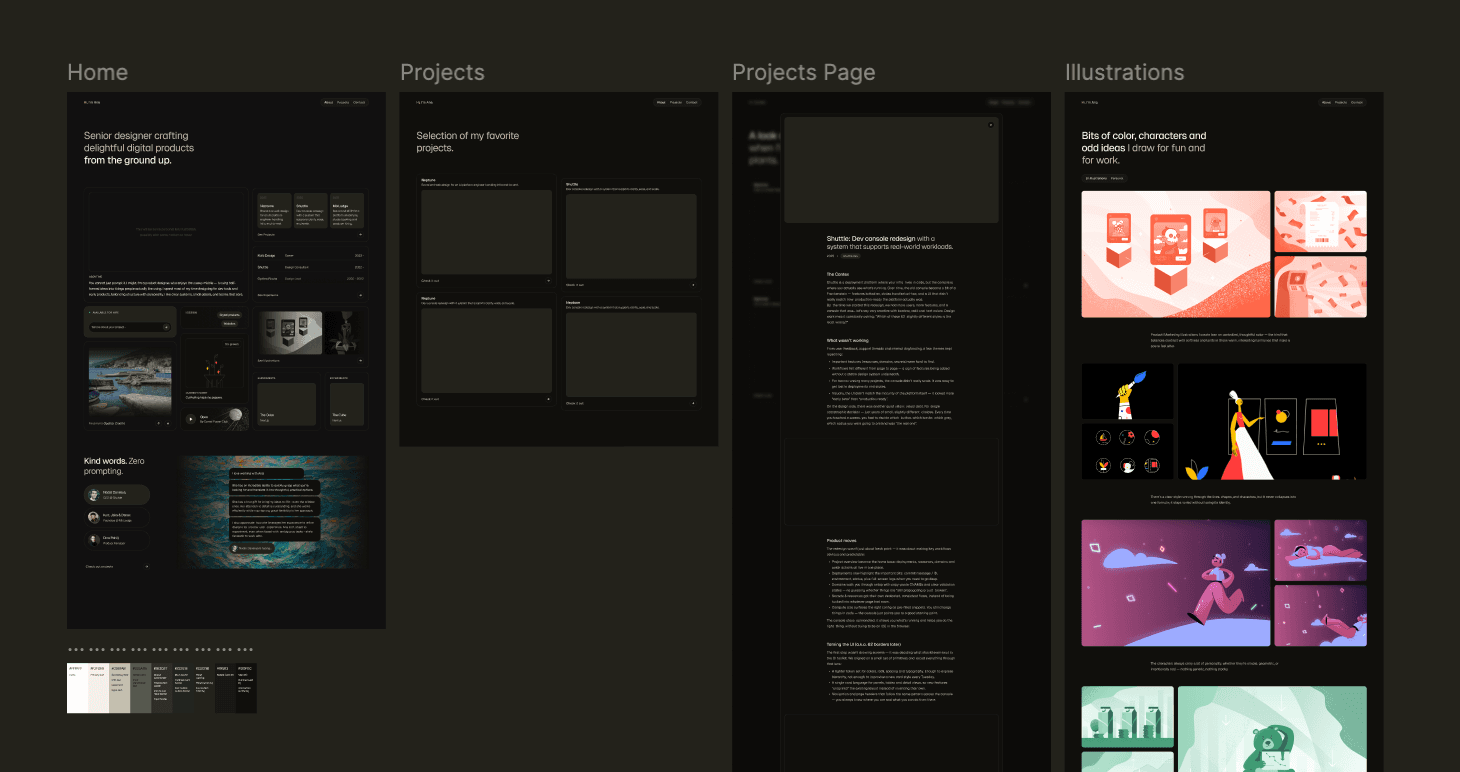
From the start, I defined a small design language and a design system page so both the site and the agents had a shared point of reference.
Early experiments with AI
At first, I took the most obvious route and experimented directly through conversational AI. The idea was simple: explain my intent, let the AI generate the code, and preview it quickly in CodeSandbox.
Turns out those quick experiments were not so quick after all. Context was easy to lose, changes broke earlier logic, and a lot of time went into re-explaining intent and fixing things that had already worked.
Moving to a real workflow
Switching to a proper setup changed the process completely.
Using Cursor with a GitHub repository and Vercel introduced structure. Agents had file-level context. Changes were scoped. Pull requests made iteration safer. Refactors became possible instead of risky.
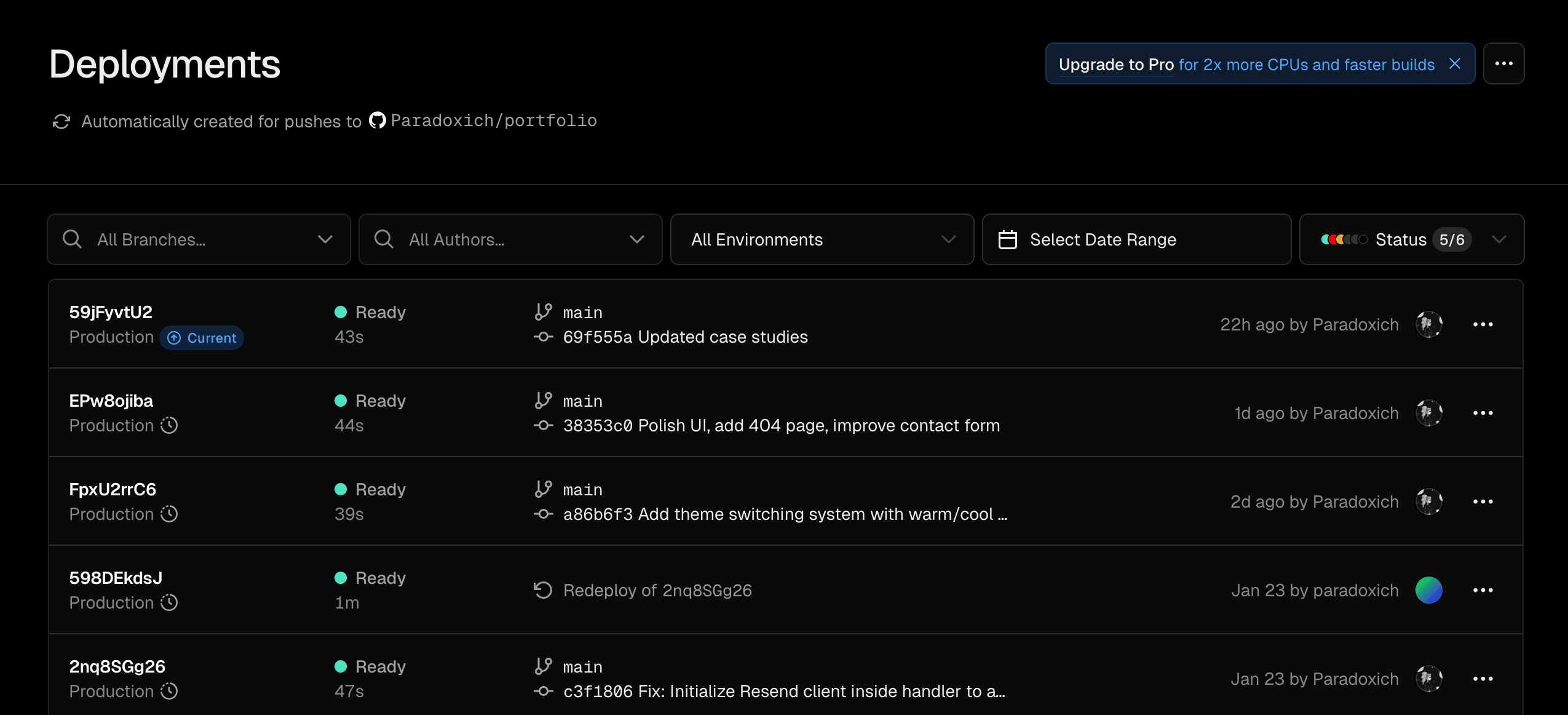
This was the point where the work stopped feeling fragile and started feeling maintainable.
Working with AI in practice
AI still generated much of the raw output, but the way I worked with it changed. Instead of long conversations, I worked directly with files, diffs, and focused edits.
I became more deliberate about where AI helped and where it was faster to make changes manually. This balance mattered, especially when working on custom interactions, where iteration speed and token usage become real constraints.
A system that could grow
Because the design language and system page existed from the start, changes could build on what was already there.
Theming, custom components for case studies, and layout refinements could be added without rewriting large parts of the site. Design and implementation stayed aligned as the project evolved.
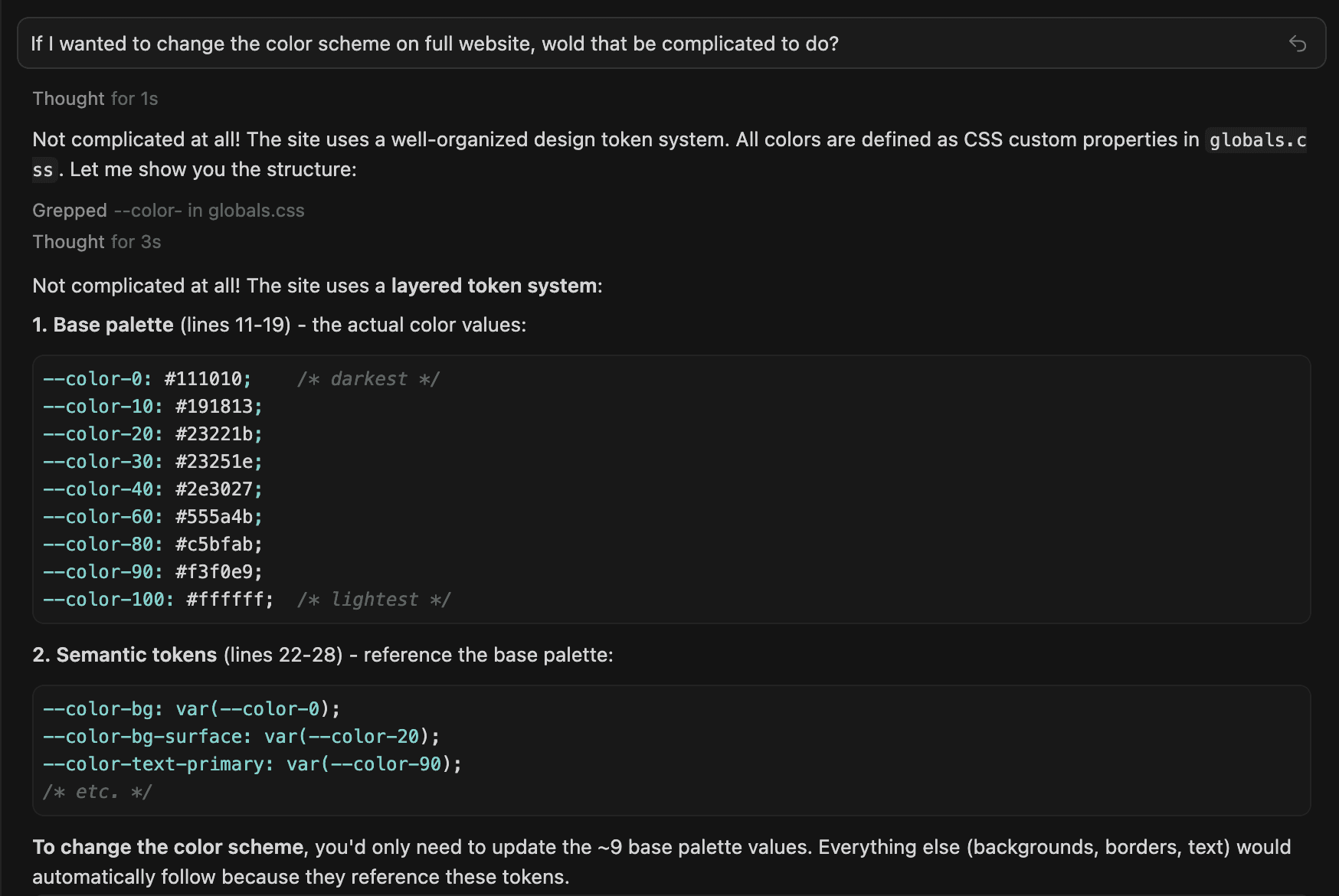
Outcome
The result is a portfolio that behaves like a real system rather than a static showcase.
More importantly, it gave me a clearer sense of what it actually takes to work with AI tools without losing control along the way.
Built with
Design and layout in Figma
Implementation using React, Next.js, Tailwind, and Framer Motion
AI-assisted workflows using Cursor, GitHub, and Vercel